


Beton Kunst
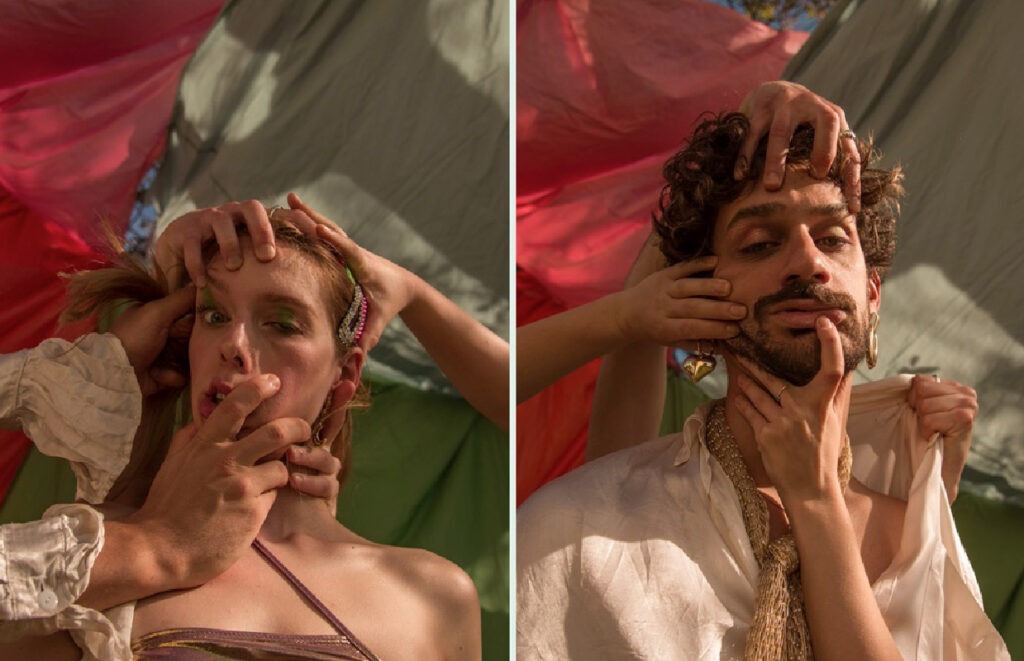
Art Collective Beton Kunst was founded in 2023 in Belgrade, Serbia, by: Luka Jovanov, theatre director; Branislav Sarić, sociologist and poet; Dunja Maksimović, sculptor and costume designer; Katarina Ilijašević, choreographer and dancer. Beton Kunst is concreteness, unscrupulousness, constancy, firmness, relentlessness, strength, courage, tenderness, rebellion. Beton Kunst is intimate, open, clear, and loud. Beton Kunst avoids expression through an openly critical discourse on the subject of the state and its ideology. Beton Kunst does not establish a distance towards that ideology through ironic negation. We owe this kind of approach, which could be called “subversive affirmation”, that is, a tactic that enables the use of elements of certain social and political discourses, then their taking over and consumption, and finally undermining, to the aesthetics and „working method” of NSK (Neue Slowenische Kunst). Destruction (or criticism) has always existed and continues to exist as construction (or affirmation), whereby affirmation is revealed as a unique critique of the system and its ideology. We are not interested in criticizing the current situation, we are interested in building the situation, by reinterpreting, revitalizing, and transforming tradition, as well as our own work.
We are Beton Kunst.
The performance “Concert of the Mumbling Choir 57, powered by Beton Kunst” employs mumbling of a well-known poem by one of the most prominent Yugoslav writers Oskar Davičo, as a metaphor for self-censorship and introspection, challenging traditional displays of nationalism. It delves into the complexities of Serbian identity and societal responsibility, inspired by some of the principles practiced by the art collective known as Neue Slowenische Kunst, the performance invites viewers to contemplate the interplay between individual expression and broader societal issues. The performance is intended to convey an anti-militaristic and anti-macho message. By saluting with one hand, and placing the other hand in the mouth, participants symbolically reject the glorification of militarism and machismo culture, while at the same time suggesting a silencing of aggressive or dominating tendencies, and emphasizing the importance of introspection and self-restraint over outward displays of power. The collective act of mumbling serves as a metaphor for feelings of inadequacy and the question of one’s right to speak about societal issues. It reflects a sense of incomplete responsibility, suggesting a reluctance or inability to fully engage with one’s surroundings. Also, the performance suggests a subversive play on classic poetry readings, that are almost always comprehensible and clear, adding up to the manipulation of the classical choir arrangement concept.
Throughout the performance, a subtitle of the poem is projected onto the floor in front of the choir as they mumble the lyrics. This visual element adds another layer of immersion for the audience, allowing them to follow along with the words as they are expressed through the collective murmurs of the choir. It serves to reinforce the connection between the spoken word and the physical presence of the performers, enhancing the overall impact and meaning of the piece. The repetition of the part of the refrain “među ljudima” (“among the people”) at the end of the performance, which reinforces the sense of community across various societal spheres, from the streets to the cultural institutions, emphasizes the interconnectedness of individuals within our contemporary society.