


Rena Rädle & Vladan Jeremić
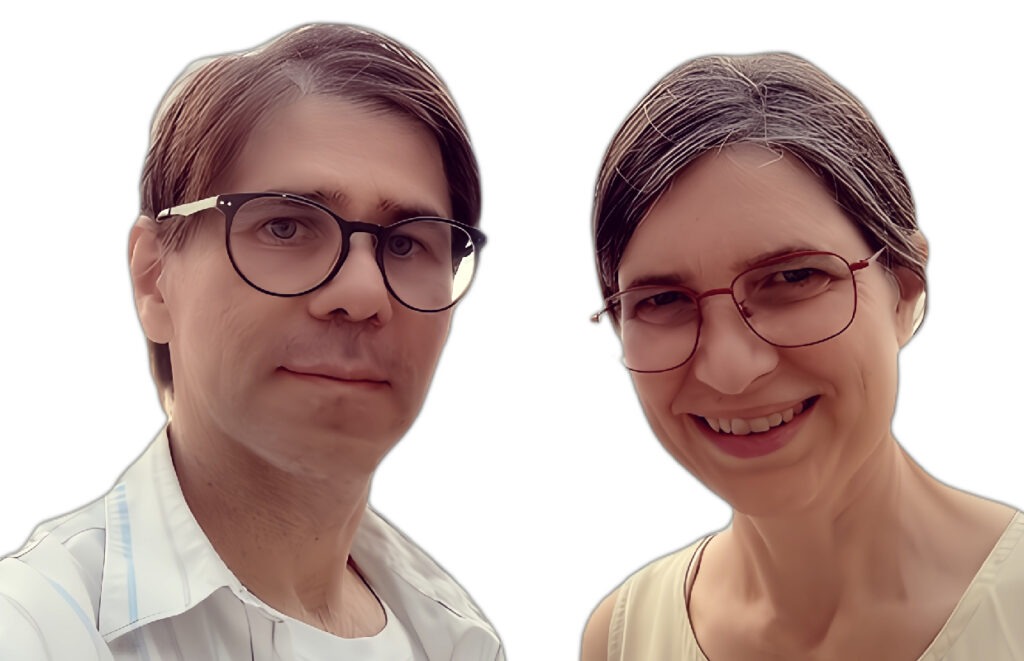
Rena Rädle & Vladan Jeremić (Berlin/Belgrade) are artists whose research-oriented work includes installations and artistic interventions in public space. In their joint practice, they address the question of the intersection of art and politics, revealing the contradictions of contemporary societies. Using techniques that are easily reproduced and distributed, such as drawing and printmaking, and simple materials such as textile, cardboard and wood, they insist on the use value of artistic production. They develop the transformative potential of art in the context of social struggles and in collaboration with social movements.
—
The Pain of Symbols
On the horizon of Mitrovica stands a monument to the local miners and Yugoslav partisans who died in World War II, erected in 1973 and designed by Bogdan Bogdanović. Rena and Vladan explore the system of symbols that was developed as a vocabulary of resistance to nationalism during socialist Yugoslavia. They overlay this system with contemporary contexts, unfolding them into new constellations, relying on a method Lettrists called metagraphics—a way of merging words, icons, poetics, or sound. Their resulting flags consider Bogdanović’s legacy, contemporary realpolitik endeavours, and urban spaces dominated by nationalist features. Bogdanović understood his public memorials in Mitrovica and elsewhere as anti monuments that defy chronological classification, that do not follow dominant patterns of socialist modernism or realism. He developed a formal language connected to mythological traditions and architecture of the ancient period. He tried to create a timeless language of humanism in sites of great suffering and heroism. Many of these memorial sites are in a deplorable state today. In their flags, they refer to Bogdanović’s Partisan Memorial Cemetery in Mostar and the Miners Monument in Mitrovica. They are two cities of many where Bogdanović’s monuments occupied an important landmark during the time of socialist “brotherhood and unity” and whose urban spaces became again painfully segregated due to divisions, nationalism, and war.